
Central Indiana sits on some of the highest radon-risk soil in the country. Most homebuyers never hear that until closing gets close. Radon is a colorless, odorless gas that seeps up from the ground through foundation cracks and gaps. Testing before you buy tells you exactly what you’re dealing with. It also gives you room to negotiate if levels come back high.
The Environmental Protection Agency sets 4.0 picocuries per liter as the action level for radon. Homes at or above that mark need a mitigation system. Here’s why the local risk runs high and what that EPA threshold covers. Below, we walk through what radon testing looks like during an Indianapolis inspection.
Why Central Indiana Homes Carry Elevated Radon Risk
Indiana’s bedrock is rich in uranium, especially in black shales and carbonate rock like limestone and dolostone. As that rock breaks down, it releases radon gas into the soil above it. Glacial clay left behind by the ancient Huron-Erie ice lobe can trap that gas. Instead of letting it disperse, the clay often channels it toward home foundations.
Dry stretches make it worse. The clay cracks and gets more permeable. More radon works its way upward toward basements and crawlspaces. It’s a slow, seasonal process, not a one-time event. That’s part of why a single reading only tells part of the story.
This geology puts Indiana in a rare spot nationally. Under the EPA’s radon zone map, the state has no low-risk counties at all. Fifty-seven of Indiana’s 92 counties fall into the highest-risk zone. The other 35 land in the moderate-risk zone.
Home age doesn’t change much here. A brand-new build on a slab can test just as high as an older stone-basement home. It can sometimes test higher, since fresh foundations haven’t settled yet. The gas comes up from the ground, not from anything inside the house.
Neighborhood and price point don’t predict a result either. Two houses on the same street can post very different numbers. Foundation cracks, sump pits, and how tightly a home is sealed all play a role. A real, measured test beats any assumption about the neighborhood or the build’s age.
What the EPA’s Action Level Means
Four picocuries per liter isn’t a line between safe and dangerous. At that level, a lifetime non-smoker’s lung cancer risk runs about 7 in 1,000. That figure comes from EPA health risk data. For smokers, the same level carries a risk closer to 62 in 1,000. Below the threshold, risk doesn’t disappear. No exposure level is considered completely safe.
That risk climbs with both the radon concentration and the years spent breathing it. Between 2.0 and 4.0 pCi/L, the EPA still recommends considering a fix. That’s especially true for long-term occupants or anyone in the household who smokes.
Radon ranks as the second leading cause of lung cancer in the United States. Only smoking causes more lung cancer deaths nationwide.
AllCheck reports radon results as a plain number measured against that EPA threshold, not as an alarm. A homeowner deciding whether to test, negotiate, or fix a radon issue needs the real figure first. Calm, accurate reporting lets buyers and sellers make their own call.
Short-Term Versus Long-Term Radon Testing
Radon tests come in two main forms, short-term and long-term. Short-term tests run anywhere from two to seven days under closed house conditions. Long-term tests run 90 days or longer and capture a full seasonal average.
AllCheck’s 56-hour Continuous Radon Monitor test falls into the short-term category. It’s built for the pace of a real estate transaction. Radon levels shift with the seasons, since heating and cooling change how air moves through a house. A short-term test gives buyers and sellers a fast, reliable number without waiting three months for results.
Homeowners without a closing deadline sometimes choose a long-term test for a fuller picture. A borderline short-term result, between 4 and 10 pCi/L, often gets a second test. Only after that confirmation does anyone commit to mitigation. Either approach gives a real number to act on, rather than a guess.
How Radon Testing Works During an Indianapolis Home Inspection
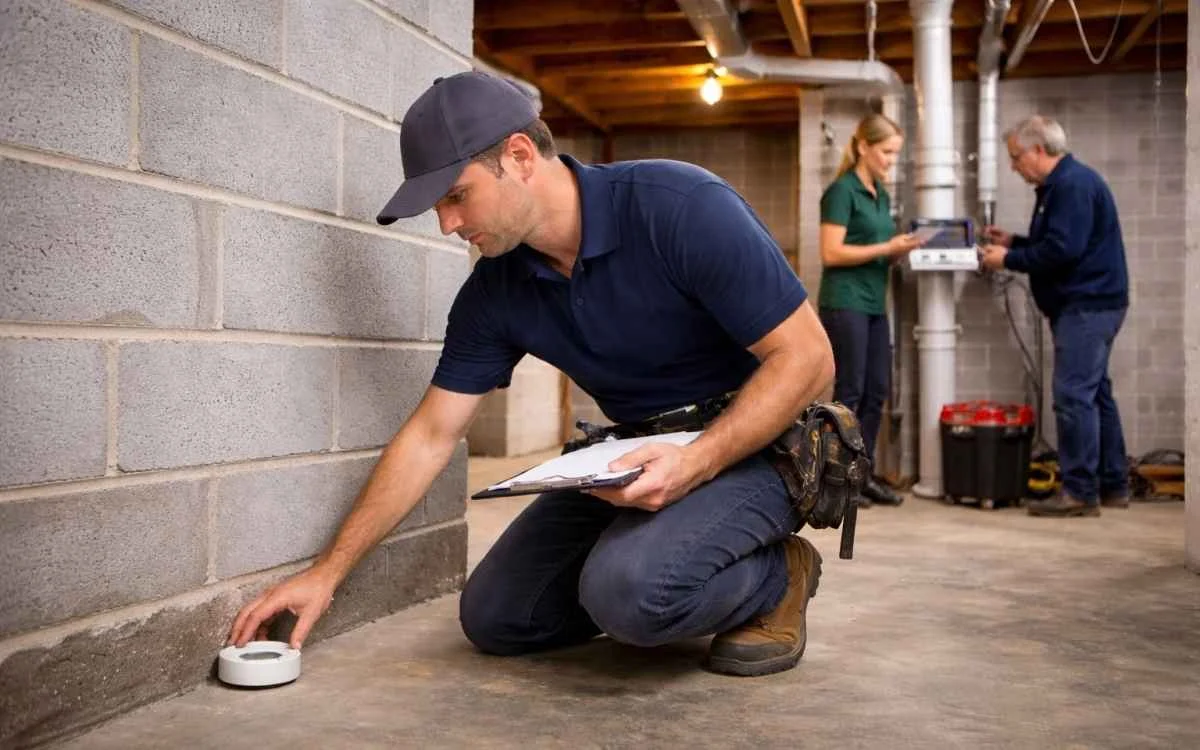
Radon testing at AllCheck runs through a Continuous Radon Monitor placed in the home’s lowest livable level. That’s typically the basement, or whichever lowest floor a buyer would use day to day. The monitor stays on-site for 56 hours straight and gets calibrated annually by a certified lab.
A Certified Radon Technician handles the setup, monitoring, and reporting. Indiana law restricts who can legally perform a radon test for a real estate transaction. It’s a meaningful trust signal, not just paperwork.
Every AllCheck inspector performing radon work carries that certification. The result holds up for a purchase agreement, a lender requirement, or a closing deadline. A test run without that credential may not carry the same weight in negotiations.
The home has to sit under closed house conditions for the full 56-hour window. That also applies to the 12 hours beforehand. Doors and windows stay shut as much as possible so the reading reflects normal use. Occupants can still come and go through the day. They just can’t prop doors open for long stretches or run whole-house fans.
Results get appended directly to the home inspection report once testing wraps up. Buyers see the radon number alongside every other finding. That report arrives inside the same binder AllCheck hands over on inspection day. A dedicated tab holds the printed results. A radon testing visit runs $140, and it pairs easily with a same-day complete home inspection. Full pricing for every AllCheck service sits on the pricing page.
If Your Radon Test Comes Back High
A result at or above 4.0 pCi/L calls for radon mitigation. That means a system that vents the gas from beneath the foundation to the outside air. Most setups run a pipe from the slab or crawlspace up through the roofline. A built-in fan keeps a steady, gentle vacuum under the house.
Mitigation contractors handle the installation, not home inspectors. AllCheck’s role is testing and reporting the number, not selling the fix. That separation keeps the test result independent.
Cost varies by foundation type and how many suction points a home needs. Extension research citing EPA data puts typical mitigation costs between $900 and $3,000. A standard basement system averages around $1,500. A crawlspace or a more complex foundation can push toward the higher end.
Once a system goes in, a follow-up test confirms whether it worked. Most homes drop well below the action level within a day of the fan running. Every home responds a little differently, though. Buyers negotiating radon findings often ask sellers to cover installation. A post-mitigation retest before closing then confirms the fix.
When to Test During an Indianapolis Home Purchase
Radon testing works best scheduled alongside the complete home inspection, early in the due diligence window. That timing leaves room to negotiate if the number comes back high. It does this without adding pressure to a closing date already locked in. Waiting until the final week leaves little room for mitigation or renegotiation.
Sellers benefit from testing too, especially ahead of listing a home in a Zone 1 county. A documented result removes a question mark from the transaction early. It can prevent a surprise finding from derailing a deal near the finish line. The what to expect page walks through what a full visit includes.
Radon is only one of six environmental tests AllCheck offers alongside standard inspections. Every finding gets reported against the real, current standard behind it. Buyers across Carmel, Fishers, Noblesville, Greenwood, and Avon face the same statewide geology as Indianapolis proper. The same logic applies across the whole metro.
What a Radon Number Means for Negotiations
A result above 4.0 pCi/L becomes a real line item in a purchase negotiation. It carries the same weight as a roof or an electrical panel finding. Buyers can ask sellers to install mitigation before closing, split the cost, or cover it themselves. None of those paths is automatically right. It depends on the rest of the deal and how motivated each side is to close.
A seller who tests early, before listing, skips that scramble entirely. Fixing a known radon issue ahead of time usually beats a last-minute negotiation. It also lets a seller market the home with a documented, post-mitigation result already in hand.
Buyers who skip radon testing to save time often regret it after move-in. A $140 test is a small cost next to the price of a home. It answers a question that would otherwise linger for years. The negotiating power that comes with testing before closing, though, is gone once you own the place.
Well Water Adds a Second Radon Exposure Pathway
Most Central Indiana buyers focus on airborne radon. Well water is a second route worth knowing about, especially outside city limits. Radon dissolves into groundwater the same way it seeps through soil into a foundation. Showering, running a dishwasher, or boiling water can release that dissolved gas into the air.
City water systems get tested and treated before reaching a tap. Private wells carry no such requirement, and the property owner is entirely responsible for testing. A rural property on well water can carry two separate radon exposure pathways instead of one.
AllCheck’s water testing service checks wells for bacteria, lead, and other contaminants. It does not test specifically for dissolved radon gas. A homeowner concerned about waterborne radon should ask their inspector which lab offers that specific test. Pairing the two conversations, air and water, gives a fuller picture of a rural property’s risk profile.
Common Questions About Radon Testing in Indianapolis
Does every home in Indianapolis need a radon test? The EPA recommends testing every home, regardless of its zone designation. Marion County’s Zone 1 status makes that recommendation especially relevant here.
Can I test for radon myself instead of hiring a professional? DIY kits exist, but real estate transactions typically call for a technician-performed test. A Certified Radon Technician using calibrated equipment also holds up better during negotiations.
How long does a radon test take? AllCheck’s Continuous Radon Monitor stays on-site for 56 hours. That follows at least 12 hours of closed house conditions beforehand.
Does a finished basement change radon risk? No. Radon moves through concrete and block whether a basement is finished or not. Finishing does not seal the entry points a mitigation system would address.
How often should a home be retested after the first result? Retest after any major renovation, new HVAC work, or foundation repair. Radon levels can shift whenever the way air moves through a house changes.
If your Indianapolis purchase timeline is coming up, get radon testing on the calendar early. That leaves real room to negotiate if the number comes back high. Contact AllCheck Inspections to schedule a complete home inspection with radon testing included. You’ll get a same-day report with the real number behind it.
AllCheck Inspections serves Indianapolis and the nine-county Central Indiana area and can be reached at (317) 202-3020.
