
RADON TESTING
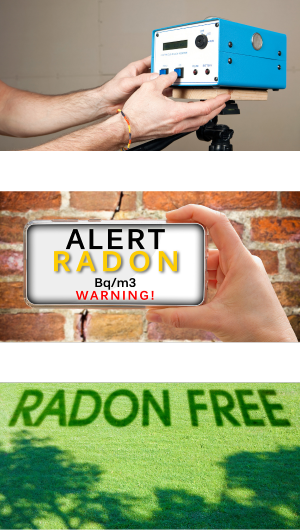 Radon is a radioactive gas that can be found in the air and in water, and is a leading cause of lung cancer in the United States and enters a house through small cracks and openings.
Our Certified Radon Technician will utilize a professional Continuous Radon Monitor (CRM) which is calibrated annually by a certified laboratory. The home should be under “Closed House Conditions” for the entire time, including 12 hours prior to the test start. Occupants may still enter and exit the home but keeping open doors and windows to a minimum. Your radon test results will be appended to your Home Inspection Report.
If radon levels are tested to be too high for safe occupancy of your home, it will need to be reduced. Radon mitigation is a fairly simple process of installing a vent pipe from underneath the concrete slab or crawlspace to outside the home. The harmful gas then dissipates into the air becoming harmless.
More detailed information about Radon may be found on our Radon Information Page.
RADON TESTING
Radon is a radioactive gas that can be found in the air and in water, and is a leading cause of lung cancer in the United States and enters a house through small cracks and openings.
Our Certified Radon Technician will utilize a professional Continuous Radon Monitor (CRM) which is calibrated annually by a certified laboratory. The home should be under “Closed House Conditions” for the entire time, including 12 hours prior to the test start. Occupants may still enter and exit the home but keeping open doors and windows to a minimum. Your radon test results will be appended to your Home Inspection Report.
If radon levels are tested to be too high for safe occupancy of your home, it will need to be reduced. Radon mitigation is a fairly simple process of installing a vent pipe from underneath the concrete slab or crawlspace to outside the home. The harmful gas then dissipates into the air becoming harmless.
More detailed information about Radon may be found on our Radon Information Page.
Frequently Asked Questions
What is radon and why should I test for it?
Radon is a naturally occurring radioactive gas produced as uranium breaks down in soil and rock. It is colorless and odorless, so testing is the only way to know whether it is present. The EPA identifies radon as the second leading cause of lung cancer in the United States and the leading cause among people who have never smoked.
Is radon a problem in the Indianapolis area?
Yes. Much of Indiana, including the Indianapolis metro, falls in EPA Radon Zone 1 – the highest-risk category, where the predicted average indoor radon level is above 4.0 pCi/L. Testing is strongly recommended for homes across Central Indiana.
How long does a radon test take?
A standard short-term radon test runs for 48 hours, during which the home needs to be kept under closed-house conditions. AllCheck has your report ready within 24 hours of the test finishing.
What radon level is considered unsafe?
The EPA recommends taking action to reduce radon at 4.0 pCi/L or higher, and suggests considering mitigation for levels between 2.0 and 4.0 pCi/L. Your report gives you the measured number so you can decide with real information.
Can radon testing be done during my home inspection?
Yes. Radon testing is commonly scheduled alongside a Complete Home Inspection, so you get both sets of results before your inspection contingency deadline.
