
Siding is the part of your house that takes the weather so the structure underneath does not have to. It is also the part most people only think about when it starts to look bad – and by then, the appearance is usually the least interesting thing going on.
Cleaning siding is straightforward. Doing it without damaging the siding, or driving water somewhere it should not go, takes a little more care. Here is how to do it properly on both aluminum and vinyl, and what to watch for while you are up close.
Aluminum and vinyl are not the same material
They get treated as interchangeable, and they are not.
Aluminum siding has a painted finish over metal. That finish is what you are cleaning, and it is what eventually fails. As it weathers, the paint oxidizes and releases a fine powder – the chalky white film that comes off on your hand. Aluminum also dents, and a dent is permanent.
Vinyl siding has the color running through the material rather than sitting on top of it, so it does not chalk the way aluminum does. What it does instead is fade under UV, hold mildew in shaded areas, and grow brittle with age – older vinyl can crack when struck, particularly in cold weather.
The cleaning method is broadly similar. The failure modes are completely different.
Before you start
- Walk the whole wall first and look for loose, cracked or missing panels. Washing a wall with a gap in it is how water gets behind the siding.
- Close all the windows, and cover exterior light fixtures and outlets.
- Wet down plantings before you start and rinse them afterwards. Most cleaning solutions are hard on foliage.
- Test your solution on a small, low-visibility section and let it dry before committing to the whole house.
- Do not hold a pressure washer while standing on a ladder. The recoil is real, and this is one of the more common ways homeowners get hurt doing their own maintenance.
How to clean aluminum siding
A soft-bristle brush on an extension pole, a garden hose and a bucket of mild detergent will handle most aluminum siding. Dish soap in warm water is genuinely enough for general dirt. For heavier soiling or mildew, an oxygen bleach solution is effective and far gentler on surrounding plants than chlorine bleach.
Two details matter more than the product you choose:
Wash from the bottom up, rinse from the top down. Cleaning solution running down over dry, dirty siding leaves streaks that are difficult to remove afterwards. Working upward keeps the surface below already wet, and rinsing downward carries everything off cleanly.
Work in sections and do not let the solution dry on the surface. On a hot, sunny wall this happens faster than you expect. Shade side first, or pick an overcast day.
Avoid abrasive pads, scouring powders and strong solvents. All of them will cut through the painted finish, and once that finish is compromised the metal underneath starts to corrode.
What to do about chalky aluminum siding
Run your hand down the wall. If it comes away with a white powdery residue, the paint film is oxidizing. This is the single most common complaint with aluminum siding and the reason most people start searching for how to clean it.
Washing removes the loose chalk and the siding will look substantially better. What washing cannot do is stop the oxidation, because the finish itself is breaking down. If the chalking returns within a season, or if the color has gone visibly flat and uneven, the honest answer is that the siding needs repainting rather than cleaning. A cleaned, chalk-free surface is exactly the right starting point for that.
How to clean vinyl siding
Same approach: soft brush, mild solution, bottom up, rinse top down.
Mildew is the usual problem on vinyl, and it concentrates where you would expect – north-facing walls, under eaves, behind shrubs, anywhere that stays damp and out of the sun. Oxygen bleach handles most of it. A diluted chlorine bleach solution works too and is accepted by many vinyl manufacturers, but rinse thoroughly and protect anything growing below.
Pay attention to the underside of each lap. That is where mildew and dirt actually accumulate, and a quick pass with a hose will not reach it – this is what the brush is for.
Restoring faded or dull vinyl siding
Most vinyl that looks “faded” is simply dirty, and a proper wash recovers far more of the original color than people expect. Do that first before concluding the siding is finished.
Genuine UV fading is a different matter. The color runs through the material, so there is nothing to strip back to – the pigment itself has broken down at the surface. Vinyl-safe restoration products can even out the appearance and restore some depth of color, and they are worth trying on siding that is otherwise sound.
If you are considering painting vinyl, there is one rule that matters more than all the others: use vinyl-safe paint, and do not go darker than the original color. Vinyl expands and contracts considerably with temperature. A dark color absorbs far more heat than the panels were designed to handle, and the result is warping, buckling and panels that pull loose from their nailing. This is not a minor aesthetic risk – it ruins the siding.
Pressure washing: useful, and easy to get wrong
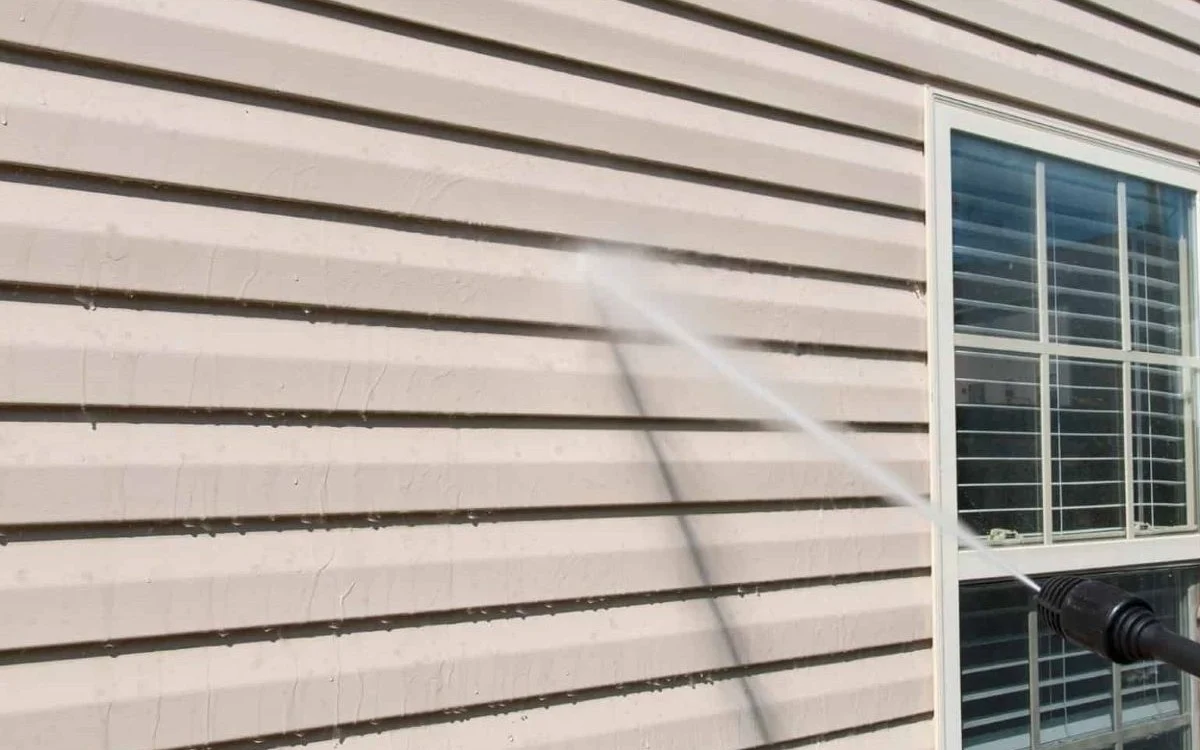
Pressure washing siding is not automatically a bad idea, but check the manufacturer guidance for your specific product first – some restrict it, and some void warranty coverage over it.
If you do use one:
- Use the lowest effective pressure and a wide-angle tip, never a narrow or turbo tip.
- Keep the spray perpendicular to the wall. Angling upward under the laps drives water behind the siding, which is the whole thing you are trying to avoid.
- Keep your distance and keep the wand moving.
- Stay well away from windows, doors, vents, light fixtures and any penetration through the wall.
Water that gets behind siding does not simply run back out. It sits against the sheathing, and the damage it causes shows up years later as rot, in a place nobody was looking.
What cleaning will not fix
This is the part worth reading slowly, because washing the house puts you closer to the exterior than you have probably been in years. While you are there, look for:
- Loose, buckled or missing panels, and nail heads working their way out.
- Failed caulk around windows, doors, trim and any penetration – hose bibs, dryer vents, electrical service.
- Siding in contact with the ground. There should be clearance between siding and grade. Where there is not, you have a moisture path and an insect path in one.
- Soft or spongy spots when you press. That is sheathing that has already been wet for a long time.
- Staining that keeps returning in the same place after cleaning. Recurring stains usually mean water is coming from somewhere, not that you cleaned badly.
Siding is a cladding, not a seal. What keeps a wall dry is the whole assembly behind it – flashing, the weather-resistant barrier, drainage, and clearance at the bottom. When those fail, the siding often looks completely normal while the damage accumulates out of sight.
When it is worth getting a professional set of eyes on it
If you find soft sheathing, recurring stains, panels that will not sit back down, or evidence of water intrusion around openings, that is past the point of a cleaning job.
A Complete Home Inspection covers the exterior alongside the roof, structure, plumbing, electrical and HVAC, and is the usual route when you are buying. If you already own the home and simply want to know what condition things are in before something becomes expensive, a Home Maintenance Inspection is the same thorough process on a schedule that suits you rather than a transaction. Where water has been getting in and you are dealing with a musty smell or visible growth, mold and mildew testing tells you what you are actually dealing with.
Frequently Asked Questions
What is the best thing to clean aluminum siding with?
For general dirt, a mild detergent such as dish soap in warm water applied with a soft-bristle brush is enough. For mildew or heavier soiling, an oxygen bleach solution works well and is gentler on surrounding plants than chlorine bleach. Avoid abrasive pads and strong solvents, which damage the painted finish and expose the metal to corrosion.
Why is my aluminum siding chalky?
The chalky white powder is the painted finish oxidizing as it weathers. Washing removes the loose chalk and improves the appearance considerably, but it does not stop the oxidation. If the chalking returns within a season or the color has gone flat and uneven, the siding needs repainting rather than cleaning.
Can you pressure wash vinyl siding?
Often yes, but check the manufacturer’s guidance first, because some restrict pressure washing and some void warranty coverage over it. If you do, use low pressure and a wide-angle tip, keep the spray perpendicular to the wall rather than angled upward under the laps, and stay well clear of windows, vents and other penetrations. Spraying upward drives water behind the siding.
Can you paint vinyl siding?
Yes, but only with vinyl-safe paint, and never in a color darker than the original. Vinyl expands and contracts with temperature, and a darker color absorbs more heat than the panels were designed for, which causes warping, buckling and panels pulling loose from their nailing.
How often should siding be cleaned?
Once a year suits most homes, though walls that stay shaded or damp may need attention more often because mildew concentrates there. Cleaning annually also gives you a regular close-up look at the condition of the panels, the caulk around openings, and the clearance between siding and grade.
Reviewed by Jason Satterthwaite, Co-Founder, AllCheck Inspections.
